3 Jun 2026
A new leadership programme is helping Pakistan prepare for and respond to disease outbreaks - and it's already embedding itself into the country's public health institutions for the long term.
Developed in close collaboration with Pakistan's National Institute of Health (NIH) and key federal and provincial partners, the programme equips mid- to senior-level health managers with the skills they need to lead disease surveillance and outbreak response effectively. The UK Health Security Agency's IHR Strengthening Project (IHR-SP) provided technical support throughout, working alongside Pakistani colleagues to design, pilot and scale the initiative.
From pilot to national programme
The programme grew from a recognised gap: structured leadership training for health managers was limited, even as Pakistan was expanding its Integrated Disease Surveillance and Response (IDSR) system nationwide. To address this, IHR-SP worked with NIH to co-develop a dedicated IDSR leadership module, first piloted in Punjab before being scaled nationally through a series of provincial workshops between September 2025 and January 2026, training a total of 228 health managers to date.
A flagship moment came with a three-day Training of Trainers workshop with the Institute of Public Health (IPH) Punjab, where 31 faculty members took part. Alongside technical content on disease surveillance and health regulations, participants developed practical skills in strategic planning, communication and decision-making, brought to life through case-based simulations and peer learning.
Those 31 faculty members are now equipped to teach the course themselves and mentor the next generation of public health professionals, creating a self-sustaining pipeline of expertise across the country. To date, a further 91 professionals have been trained by newly qualified faculty members.
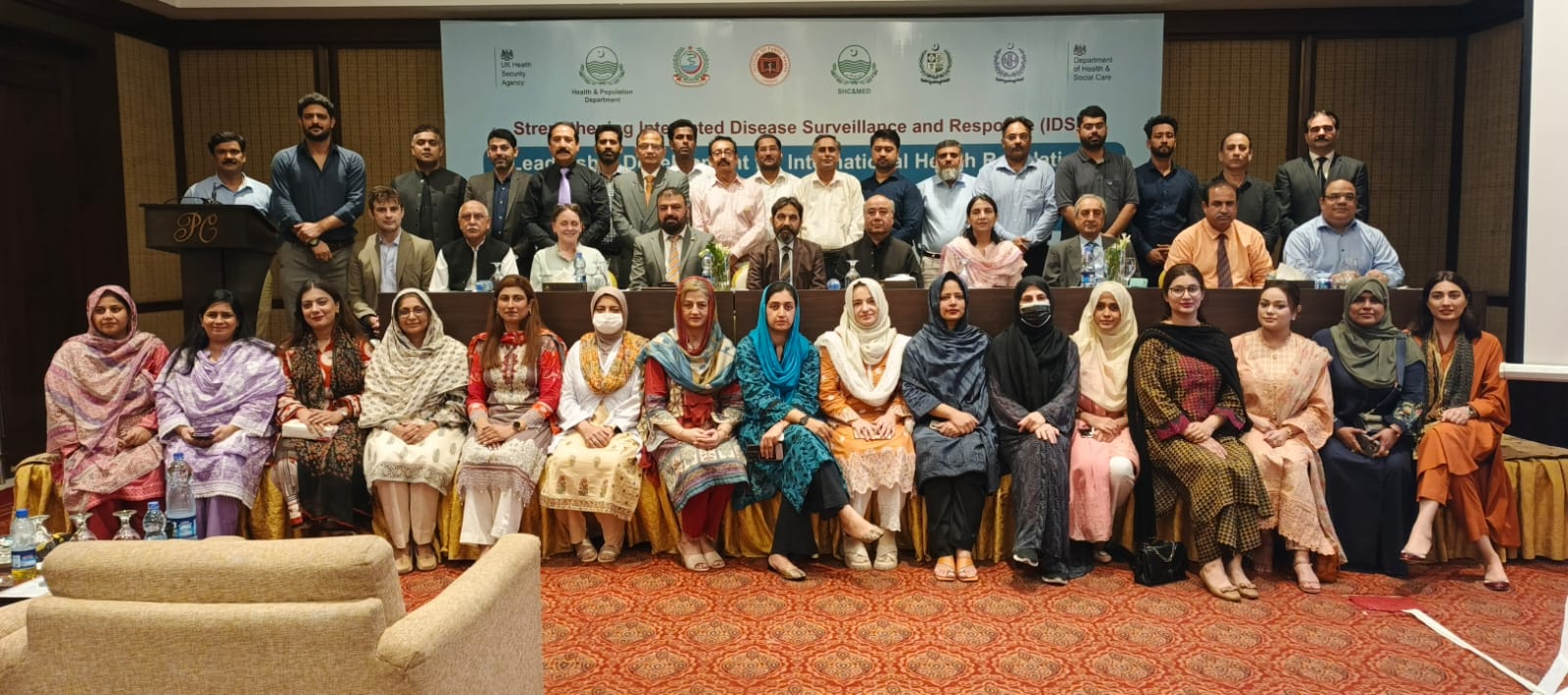
Image: IPH Punjab Faculty Members at the Training of Trainers workshop
Owned and led by Pakistan
A key achievement on this effort came in December 2025, when IPH Punjab integrated the leadership module along with the technical modules of IDSR into its Executive Staff College curriculum, where it will now be delivered quarterly as well as annually by trained faculty using domestic resources. This means the programme continues without relying on external support - a mark of genuine national ownership. The cascade training model is further expanding the programme’s reach, enabling knowledge transfer across provinces and to successive cohorts of health professionals.
Professor Saira Afzal, Dean of IPH Punjab, welcomed the collaboration: “The faculty can play a pivotal role in delivery and advancing the system strengthening approaches to develop capacities of future health managers as leaders. IPH is the platform to cater academic needs of field staff and I highly appreciate the collaborative efforts of UKHSA for strengthening the core capacities and refining the leadership skills of faculty. It is the proactive approach to reach the unreached and definitely it will bridge the gap between sustainable development & global health security”.
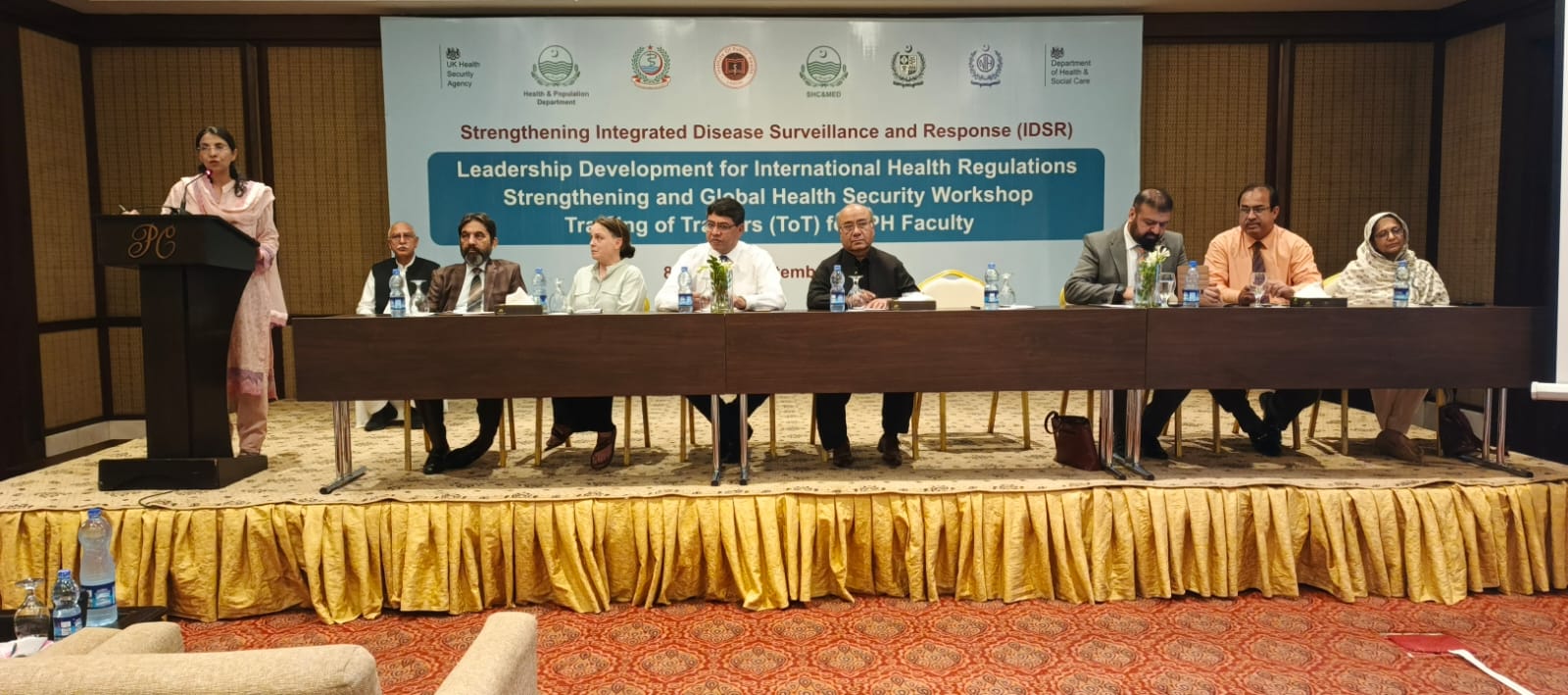
Image: Professor Saira Afzal, Dean of IPH Punjab speaks at the Training of Trainers workshop
What this means for Pakistan’s health security
Pakistan is building a more capable and resilient public health workforce: one better placed to manage surveillance systems and respond swiftly when outbreaks occur. This initiative directly supports Pakistan's obligations under the International Health Regulations (IHR 2005), the global framework that helps countries detect and respond to health threats.
Dr Muhammad Sartaj, Deputy Head of IHR-SP said: "What's been achieved for leadership in Pakistan's disease surveillance system is a real testament to the commitment and expertise of our colleagues at NIH, IPH Punjab and across the health system. By investing in the people who manage surveillance and outbreak response day to day, Pakistan is building a sustainable and resilient foundation for health security - and the programme's integration into IPH Punjab's permanent curriculum, sustained by trained faculty and domestic resources, is a significant and encouraging step towards that goal."
Looking ahead, the focus will be on extending the programme to further institutions and embedding leadership development more broadly across all levels of Pakistan's health system to sustain long-term health security.
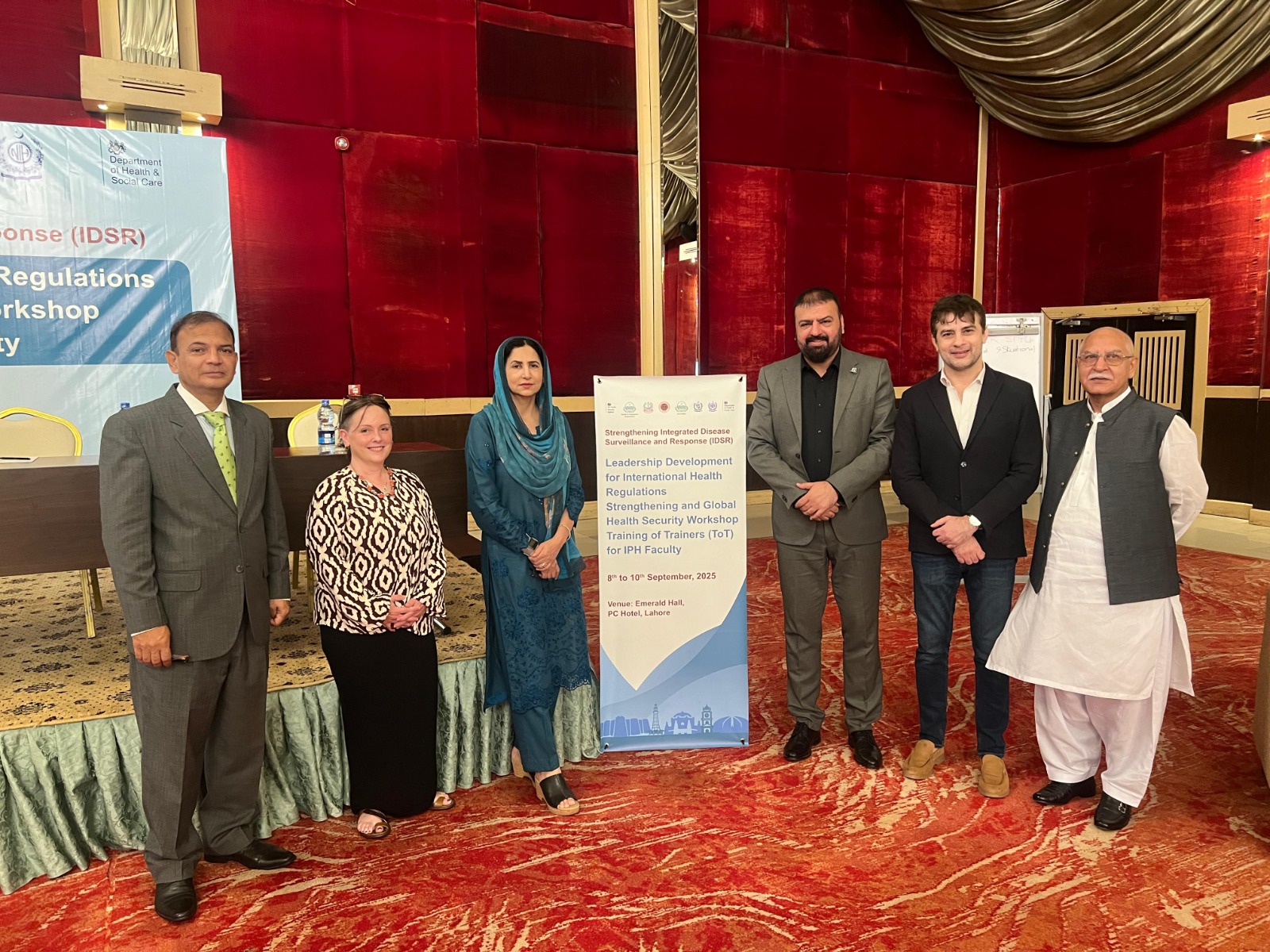
Image: UKHSA IHR-SP team who facilitated the IPH Punjab Training of Trainers with Prof Dr Shamsa Humayun, Vice President Society of Obstetricians & Gynaecologists Pakistan
Also By
Useful Resources
Related Articles
-
Building a stronger health partnership with academic institutions for strengthening IHR in Pakistan: IDSR training for Master Trainers at The Institute of Public Health, Lahore
BY Dr Muhammad Sartaj -
First-of-its-kind Community-Based Surveillance Training in Mardan to Boost Pakistan’s Disease Preparedness and response
BY najmajavedawan, Mirza Zeeshan Iqbal Baig, Nadia Nisar, Dr Muhammad Sartaj -
IHR-SP supports the Senior Leadership Symposium of the Nigeria Centre for Disease Control and Prevention
BY IHR -
From vision to action: Sindh’s IDSR Lab Network Review marks key progress in Pakistan’s IDSR journey
BY Dr Muhammad Sartaj -
From Nigeria to The Gambia: IHR-SP advances cross-sectoral leadership in public health
BY Paul Irabor
Please Sign in (or Register) to view further.