4 Apr 2026
Health workers in Mardan District, Pakistan, have begun using community surveillance data to trigger outbreak responses independently, following practical training supported by UKHSA earlier this year. Since implementation began, two community outbreak alerts have been identified and acted on by local health teams. In both cases, early detection enabled a swift community response, helping to contain the situation before they escalated further.
Sharing technical expertise in surveillance
The two-day training was delivered in January 2026 by Pakistan's National Institute of Health, the Khyber Pakhtunkhwa Health Department and the District Health Office Mardan, with technical support from UKHSA's International Health Regulations Strengthening Project (IHR-SP). Health facility in-charges, district supervisors and Field Epidemiology Training Programme staff took part, gaining hands-on experience with the DHIS2 digital platform and its dashboards.
The training focused on building practical skills to analyse, verify and act on data from the community-based surveillance (CBS) system, and linking that analysis to rapid response under the 7-1-7 framework - an internationally recognised approach that aims to detect, notify and respond to health threats within seven days. UKHSA provided technical leadership and facilitation to the training, building on earlier Training of Trainers (ToT) cascade activities.
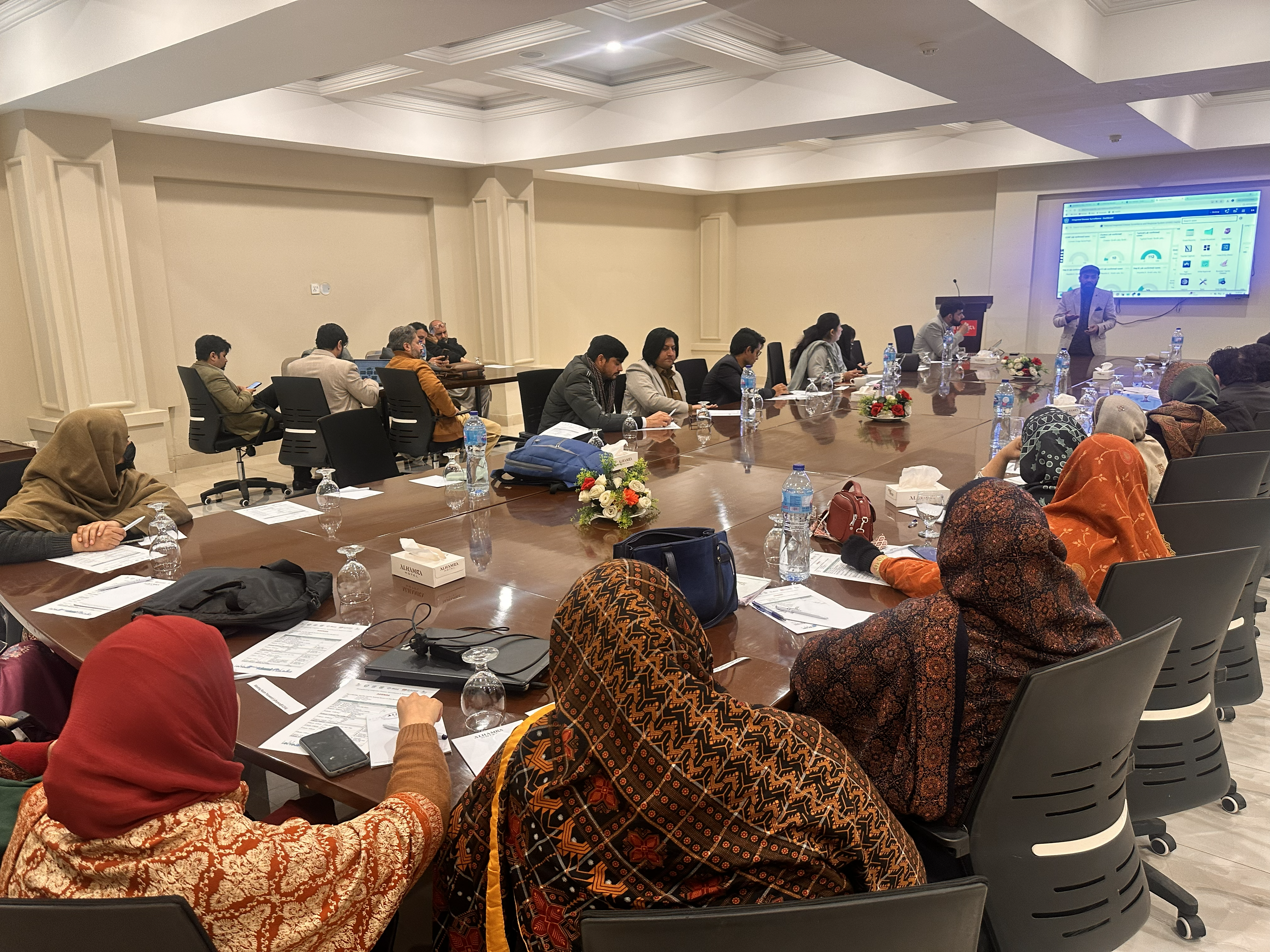
Image: the workshop underway
Community Based Surveillance taking action
The CBS system is now operational across 20 Union Councils, covering eight priority diseases including malaria, influenza-like illness and acute watery diarrhoea. In the first 150 days of implementation, over 1,762 cases have been recorded and reported through the system. For those leading the response on the ground, the value of this approach is clear. Dr Muhammad Shoib Khan, a District Health Officer in Mardan explained, "The training has improved our ability to analyse CBS data and respond more quickly to potential outbreaks at facility level", and the practical impact is already visible.
Two outbreak alerts - one for influenza like illness (ILI) and one for acute watery diarrhoea (AWD) - have been detected through the system and responded to by local District Health Offices and Rapid Response Teams. The alerts were identified at an early stage through routine community-level reporting, demonstrating the practical impact of the CBS training in strengthening timely detection, verification, and response. In both cases, trained staff were able to recognise unusual patterns, validate the signals, and initiate public health action before wider community transmission occurred.
Following the ILI alert, targeted public health awareness sessions were delivered in affected areas to reduce the risk of further spread. The investigation confirmed no severe acute respiratory infection (SARI) cases and no hospitalisations were required – an outcome that reflects the value of catching and responding to the alert at an early stage.
The AWD alert prompted swift community awareness activities, focused on safe water practices, hygiene behaviours and the use of oral rehydration solution (ORS). Early intervention of this kind is significant: without prompt action, acute watery diarrhoea can spread rapidly in a community and become life-threatening, particularly for young children.
Looking ahead
Community-Based Surveillance complements routine facility-based surveillance by detecting unusual health events at community level, before they reach hospitals and giving public health teams the time they need to respond early.
295 personnel have now been trained under the CBS programme in Mardan District, with 250 actively logging into the system and reporting. This pilot forms part of Pakistan’s commitments under the International Health Regulations (2005) and feeds into the national Integrated Disease Surveillance and Response system (IDSR). It is currently under evaluation to assess its effectiveness and inform decisions about next steps.
UKHSA will continue to provide remote technical support, instructional materials, and mentoring to district teams to sustain data-driven CBS implementation.
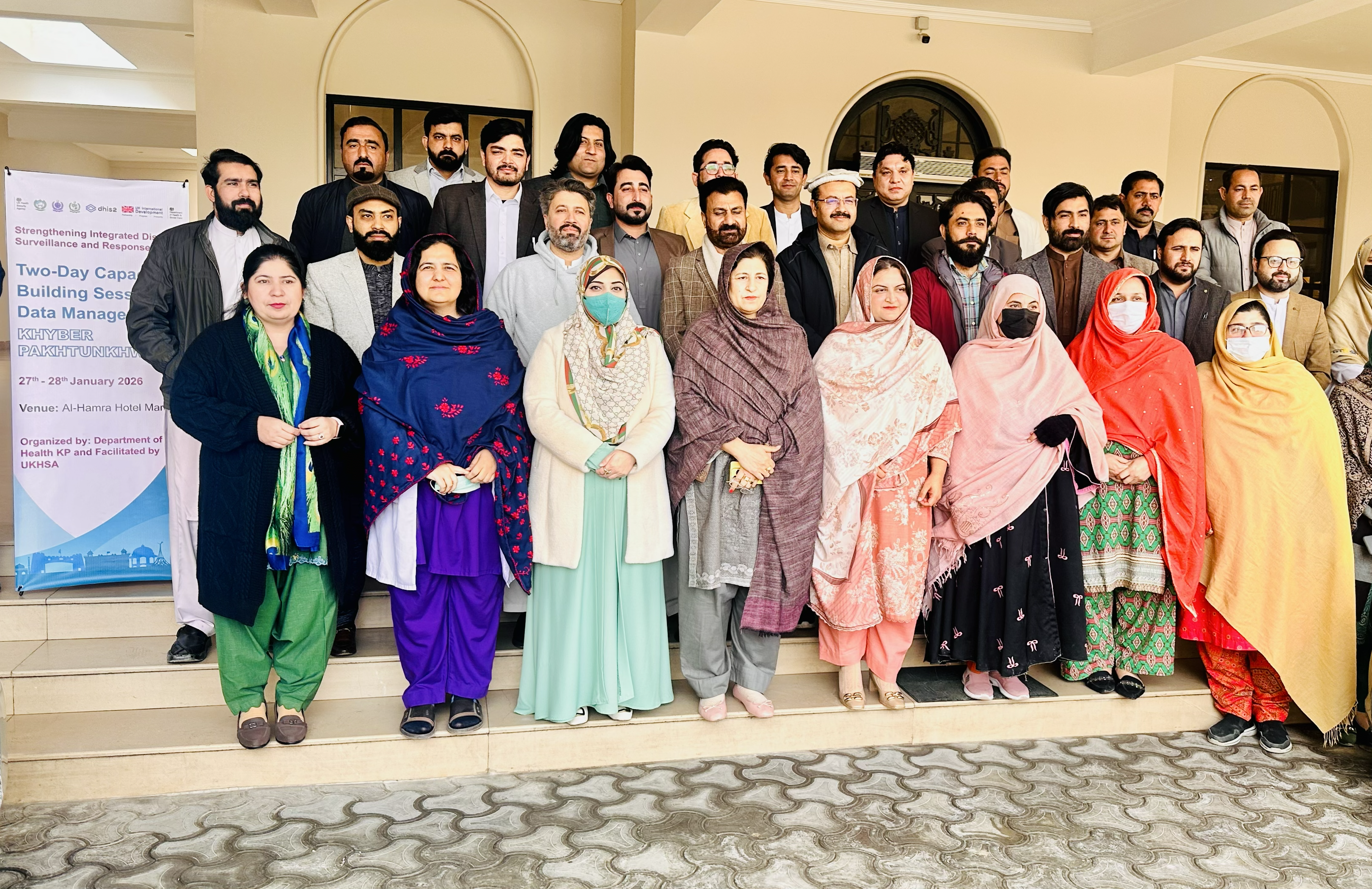
Image: workshop participants and facilitators
Also By
Useful Resources
Related Articles
-
From vision to action: Sindh’s IDSR Lab Network Review marks key progress in Pakistan’s IDSR journey
BY Dr Muhammad Sartaj -
Gilgit-Baltistan launches new laboratory network in efforts to strengthen Integrated Disease Surveillance and Response across Pakistan
BY Dr Muhammad Sartaj, Sumera Abid -
Building a stronger health partnership with academic institutions for strengthening IHR in Pakistan: IDSR training for Master Trainers at The Institute of Public Health, Lahore
BY Dr Muhammad Sartaj -
Pioneering training on “District Health Information System-2” to strengthen Integrated Disease Surveillance and Response System in laboratories in Sindh province of Pakistan
BY IHR -
Expanding Sindh’s Integrated Disease Surveillance and Response Network (IDSR) Laboratory Network to private laboratories
BY Sumera Abid, Muhammad Asif Khan, Dr Muhammad Sartaj
Please Sign in (or Register) to view further.