6 Mar 2026

For the first time, Zambia has a nationally agreed list of chemicals that pose the greatest risk to public health. This priority list gives the country a shared foundation and focus to strengthen surveillance, laboratory testing priorities, and preparedness and response arrangements for chemical events across sectors, and marks the beginning of a more coordinated approach to chemical health security.
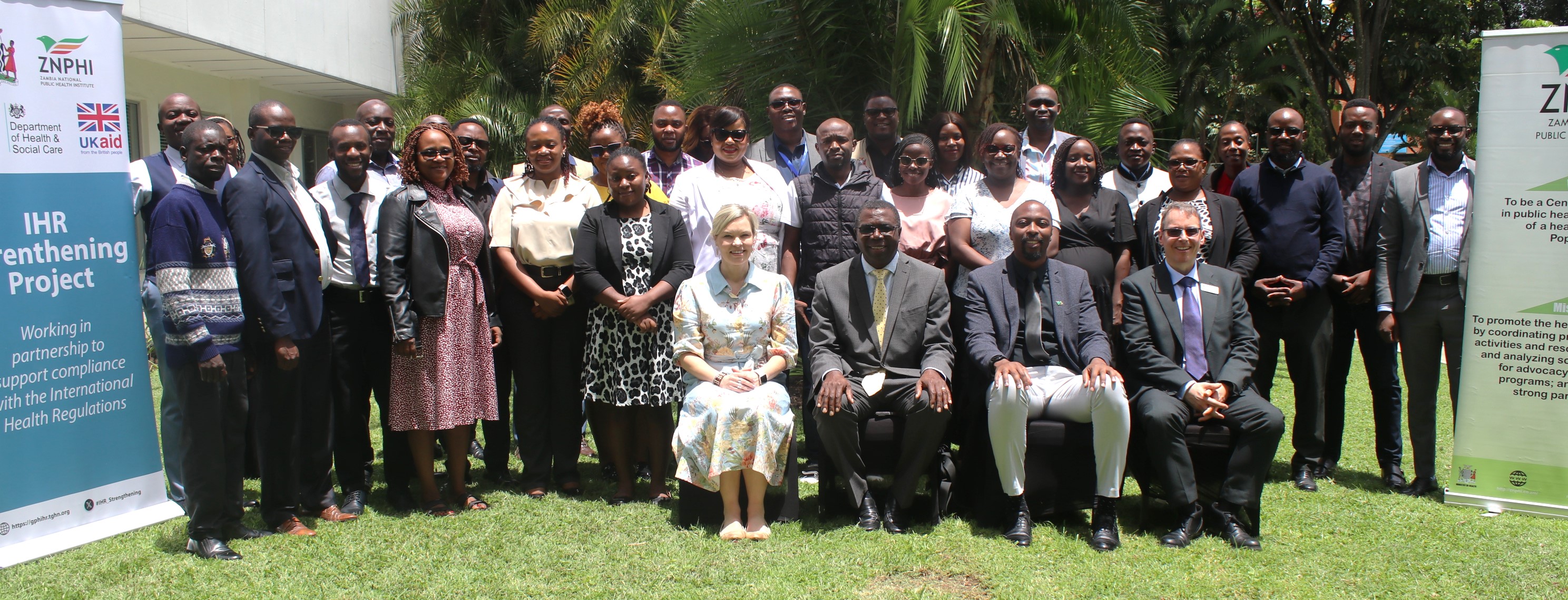
The milestone was reached at a national workshop convened by the Zambia National Public Health Institute (ZNPHI) One Health Unit and UKHSA’s International Health Regulations Strengthening Project (IHR-SP) in March 2026. Nearly 40 participants came together from across government and partner institutions, including the Ministry of Mines and Minerals Development, the Ministry of Green Economy and Environment, Defence Medical Services and the Zambia Environmental Management Agency - reflecting the cross-sectoral nature of chemical health threats.
Building the evidence base
In the most recent Joint External Evaluation (JEE), Zambia was assessed at Level 1 for chemical events – indicating no current capacity. Moving to Level 2 requires the country to identify and describe its priority chemical events to guide planning.
To enable this process, before the workshop, IHR- SP Chemicals team compiled a longlist of 65 candidate chemicals from a wide range of sources: Zambian and international references, including a UKHSA literature review of poisonings in Zambia and event-based surveillance (EBS) data, WHO resources on priority chemicals, United Nations Office for Disaster Risk Reduction (UNDRR) Hazard Information Profiles, relevant international conventions and agreements, evidence submitted by Zambian stakeholders, and findings from Zambia’s most recent STAR assessment.
Additionally, seven Zambian stakeholders opened the workshop by presenting their own data - covering large scale chemical events, hospital and poison centre cases, and laboratory monitoring data – grounding the process firmly in national evidence.
Inclusive prioritisation process
To move from a longlist of 65 to a manageable national priority list, ZNPHI led participants through a structured, multi-criteria decision analysis (MCDA) approach. Together, the participants agreed ten criteria against which each chemical would be assessed - including potential exposure, public health and One Health impacts and environmental behaviour such as how long a chemical persists in the environment or the potential to bioaccumulate in people. Each criterion was weighted to reflect Zambia’s specific context. Working groups then scored subsets of the longlist, before reconvening to compare results, clarify evidence, and reach consensus on a national list of 15 priority chemicals or chemical groups.

Fifteen priority chemicals, one national framework
The process produced a final list of 15 priority chemicals and chemical groups:
- Aflatoxins
- Persistent organic pollutants (POPs)
- Lead
- Arsenic
- Chromium
- Cadmium
- Mercury
- Paraquat/diquat
- Organophosphate pesticides
- Long-acting anticoagulant rodenticides
- Formaldehyde
- Air pollutants (particulate matter, nitrogen oxides, sulphur dioxide, carbon monoxide)
- Hydrocarbons
- Sulphuric acid
- Phytotoxins (e.g. pyrrolizidine alkaloids)
What comes next
Work is now to develop national surveillance guidelines for the priority chemicals, strengthen laboratory capacity, support the development of preparedness and response guidance, so that when chemical incidents occur, they can be detected, reported and managed consistently and effectively across sectors.

Useful Resources
Related Articles
-
Enhancing Public Health across our partner countries with Chemical Hazards online training
BY IHR -
Strengthening Ethiopia’s CBRN Surveillance and Response Capabilities through ‘training of trainer’ workshop
BY IHR -
IHR-SP partners with Nigeria CDC to strengthen chemical events responses following heavy metal poisonings
BY IHR -
Collaboration for the Cambodian multisector response guidance to chemical events
BY Inneke Suhanda, Meghan Cook, Ahmed Razavi -
Building future successes in Ethiopia’s Chemical, Biological, Radiological and Nuclear (CBRN) Performance with collaborative Annual Review meeting
BY IHR
Please Sign in (or Register) to view further.