2 Mar 2026
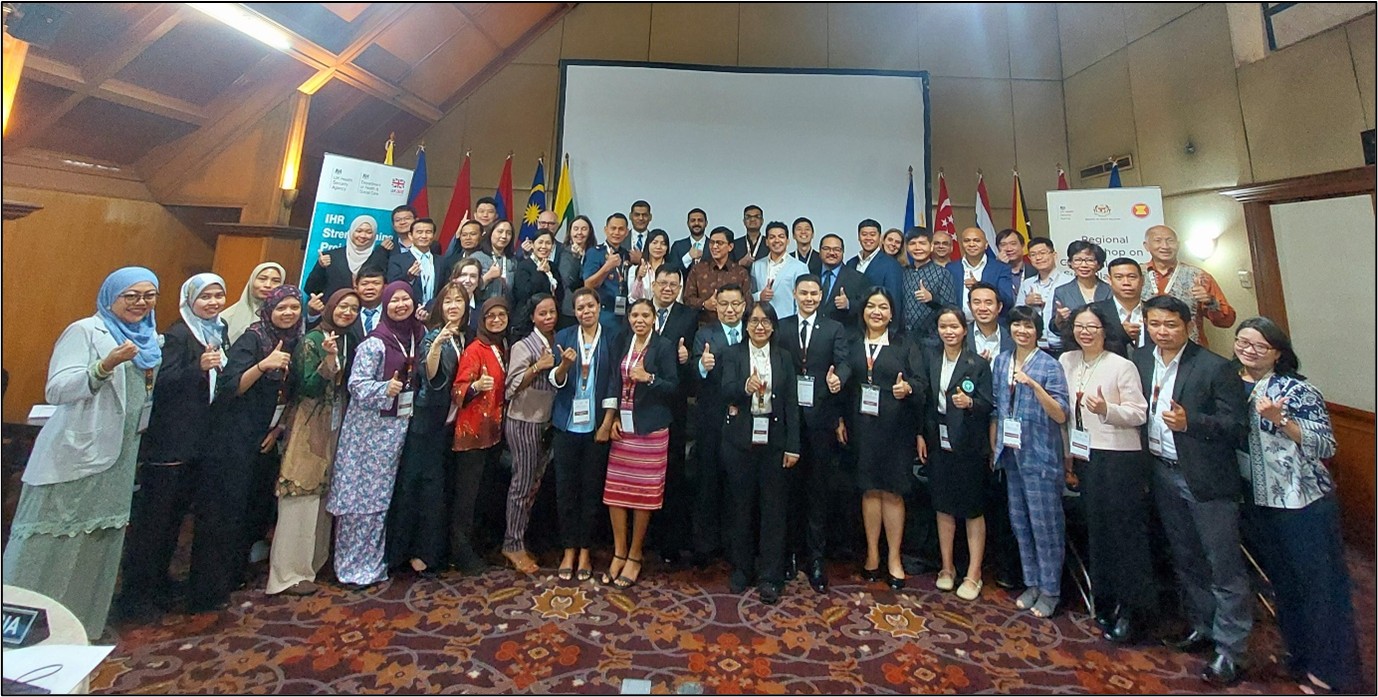
Public health professionals from across South-East Asia recently gathered in Jakarta for a three-day workshop designed to enhance the region’s ability to detect, assess and respond to chemical incidents. This first of its kind event brought together representatives from ASEAN Member States (AMS), co-organised by the ASEAN Emergency Operations Centre (EOC) Network, led by Malaysia, under its partnership with the UKHSA IHR Strengthening Project Indo-Pacific team.
Building the foundations
The workshop aimed to address a recognised gap in regional coordination by bringing together participating countries to share learning on chemical incident surveillance and early warning systems. While many ASEAN Member States have developed their own approaches to chemical detection and response, there has been limited opportunity to exchange knowledge on documentation, procedures, and cross-sector coordination. The workshop gave participants an insight into how UK systems are structured to make chemical detection and response more efficient and robust, while also creating space to learn from the priorities, systems, and technologies in place across other ASEAN Member States.
On the first day, UKHSA’s Chemicals and Poisons team introduced the core components of chemical preparedness, including: hazard mapping, chemical inventories, integrated surveillance approaches, human health risk assessment, and resource and stakeholder mapping. The discussion demonstrated that regularly updating stakeholder maps, conducting joint exercises, and routine usage of these tools in planning and response activities, are essential for multisector operational readiness.
Learning from each other
The second day shifted the focus to the region itself. Multisector representatives from each member state presented their national chemical preparedness and surveillance systems alongside challenges they faced – from sustaining inter-agency coordination, formalising roles through SOPs or memoranda of understanding, to ensuring that mapped resources remain current and accessible during emergencies.
These country level discussions surfaced shared best practices that cut across different national contexts and stages of system development, including:
- strong multisectoral governance underpins prevention, preparedness, and response;
- all-hazards and One Health integration strengthens early detection and situational awareness;
- risk-based planning and hazard mapping enable targeted preparedness and prevention;
- clear escalation thresholds, SOPs, and public communication enable timely protective action;
- laboratory systems and toxicological expertise provide decision-making credibility; and
- continuous capacity building and regional collaboration sustain progress across diverse contexts.
Putting knowledge into practice
On the last day, participants worked through a simulated chemical incident scenario, applying hazard data, tracing exposure pathways, and agreeing on public health actions in real time. Representatives from Singapore and Thailand contributed valuable learnings from previous chemical incident responses, including concrete operational insights of how surveillance data and technologies, along with risk categorisation and command structures, can come together to support rapid response to a chemical incident. These learnings offer knowledge to other Member States apply to their own contexts.
Strengthening regional readiness
As the first multisector workshop to bring together relevant stakeholders from across ASEAN Member States, the event generated rich exchanges of insight and forged new networks and lines of communication between participants - strengthening regional cooperation on chemical incident surveillance and response.
Feedback from the workshop was strongly positive. More than 95% of the 40 participants said the workshop had improved their knowledge, including in identifying potential hazards and developing action plans. Participants also reported plans to improve data sharing across government agencies and strengthen preparedness and response mechanisms in their own countries.
Dr Ahmed Razavi, Regional Lead of UKHSA IHR-SP Indo-Pacific said, "Bringing together professionals from across sectors and ASEAN Member States for the first time has allowed genuine exchanges of insight, new networks, and direct lines of communication that will endure well beyond this workshop. Together, these efforts are helping to ensure that when a chemical incident occurs, countries across Southeast Asia are better placed to act swiftly, share information effectively, and protect public health across the region."
Useful Resources
Related Articles
-
Africa CDC's chemical detection tool moves toward regional rollout
BY Lydia Izon-Cooper, Eyob Getachew Tensaw -
Enhancing Public Health across our partner countries with Chemical Hazards online training
BY IHR -
Strengthening Ethiopia’s CBRN Surveillance and Response Capabilities through ‘training of trainer’ workshop
BY IHR -
IHR-SP partners with Nigeria CDC to strengthen chemical events responses following heavy metal poisonings
BY IHR -
Building future successes in Ethiopia’s Chemical, Biological, Radiological and Nuclear (CBRN) Performance with collaborative Annual Review meeting
BY IHR
Please Sign in (or Register) to view further.