1 Sep 2025
Nigeria's national reference laboratory has achieved ISO 15189 accreditation – a globally recognised mark of quality for medical laboratories. This milestone means test results are more accurate and reliable, enabling faster detection of disease outbreaks and better protection of public health across Nigeria and beyond.
The achievement reflects a sustained partnership between the Nigeria Centre for Disease Control and Prevention (NCDC) and the UK Health Security Agency (UKHSA) International Health Regulations Strengthening Project (IHR-SP) to build robust laboratory quality management systems.
Why accreditation matters
Ensuring the accuracy, reliability, and timeliness of laboratory results forms the foundation of effective disease surveillance and response. ISO 15189 accreditation is a globally recognised framework that demonstrates that a laboratory meets international standards for both technical competence and quality management.
NCDC operates two laboratory campuses: the National Reference Laboratory (NRL) Gaduwa, Abuja and Central Public Health Laboratory (CPHL), Lagos. Together, they support a network of over 100 public health laboratories across the country, providing critical diagnostic services for diseases of public health importance.
UKHSA's approach of embedding technical experts within NCDC and the NRL since 2019 enabled hands-on mentorship for both laboratories, despite their locations across two different campuses. Through collaborative efforts and the commitment of both top level and laboratory management staff, the team has developed and implemented quality management policies, conducted gap assessments, and addressed identified non-conformities.
For Nigeria, this achievement strengthens the country's capacity to detect and respond to health threats quickly, whilst also enabling greater collaboration with international partners during health emergencies.
Building systems and staff competency for lasting quality
Initial audits identified areas needing improvement across both campuses. In response, NCDC's quality manager led teams in developing a robust Quality Management System (QMS) covering everything from document control to risk management. Laboratory staff were key in this process, creating detailed procedures, flowcharts and forms for all laboratory processes and tests, ensuring consistency and compliance with international standards. Regular internal audits and management reviews helped identify gaps and guide corrective actions, creating a cycle of continuous improvement.
With support and supervision from IHR-SP Laboratory Technical Advisers, both laboratories participated in the Strengthening Laboratory Management Toward Accreditation (SLMTA) program – an initiative designed to improve laboratory quality systems through workshops, targeted improvement projects, and on-site mentorship. IHR-SP Laboratory Technical Advisers also provided series of QMS trainings and support that has helped address some of the observed challenges, and regularly meet with the laboratory quality teams to help strengthen quality culture and achieved remarkable progress.
Using the WHO Stepwise Laboratory Quality Improvement Process Towards Accreditation (SLIPTA) framework, CPHL advanced from a zero-star baseline rating to a five-star rating, and NRL from 2 to 5 star rating, demonstrating substantial advancement in quality systems implementation.
To reinforce these gains, UKHSA IHR-SP Laboratory Technical Advisers provided specialist training for the laboratory staff focusing on understanding and implementing ISO 15189 requirements, internal auditing, laboratory documentation management and root cause analysis and corrective action implementation. The project also supported essential resources such as local and international training opportunities, targeted and closed mentorship, and regular quality review sessions. These trainings were expanded to cover both technical and managerial competencies, ensuring sustained adherence to quality standards.
With this strong foundation in place, the Medical Laboratory Science Council of Nigeria assessed both campuses and awarded ISO15189 accreditation, confirming they meet all required quality and competence standards.
Dr Olubunmi Negedu-Momoh, IHR-SP Nigeria’s Senior Technical Lead for Laboratory Strengthening said: "This accreditation represents what's possible when Nigerian leadership and international expertise work hand in hand. The commitment shown by Nigeria CDC management and laboratory staff has been exceptional, and the result is a lasting foundation for laboratory quality assurance that will strengthen Nigeria's ability to correctly detect and respond to disease threats for years to come."
This accreditation is more than a mark of quality - it’s a strategic investment in health security, service excellence, and global credibility. Together, the collaboration has built lasting capacity that will continue strengthening disease detection and response.
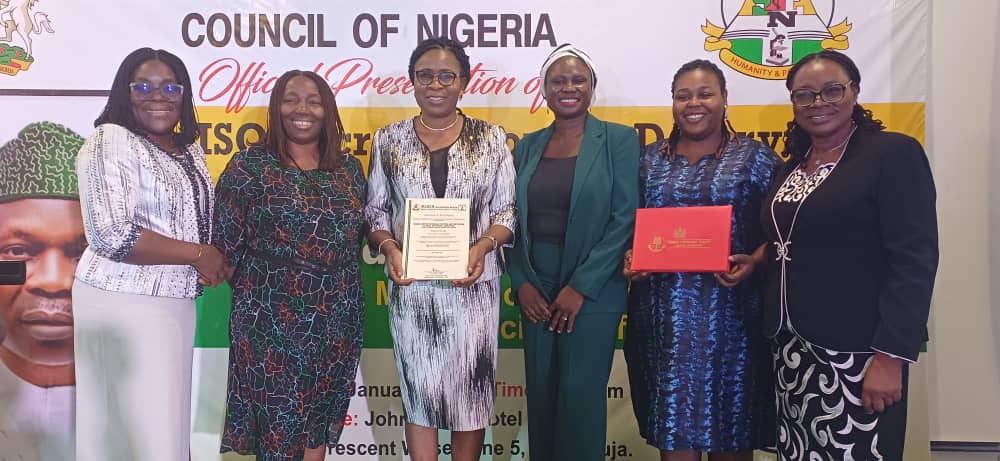
Photo: The Nigeria CDC Director of Public Health Laboratory Service alongside the Quality team receive the accreditation certificate
Useful Resources
Related Articles
-
From vision to action: Sindh’s IDSR Lab Network Review marks key progress in Pakistan’s IDSR journey
BY Dr Muhammad Sartaj -
Gilgit-Baltistan launches new laboratory network in efforts to strengthen Integrated Disease Surveillance and Response across Pakistan
BY Dr Muhammad Sartaj, Sumera Abid -
Proactive preparedness: Ethiopia establishes VHF detection capacity ahead of regional need
BY Leanne Devine, hiwothailu -
Pioneering training on “District Health Information System-2” to strengthen Integrated Disease Surveillance and Response System in laboratories in Sindh province of Pakistan
BY IHR -
From Nigeria to The Gambia: IHR-SP advances cross-sectoral leadership in public health
BY Paul Irabor
Please Sign in (or Register) to view further.