30 Jun 2026
Health workers across Nigeria are now better equipped to detect and respond to outbreaks of Bordetella pertussis, commonly known as whooping cough, following a training programme led by the Nigeria Centre for Disease Control and Prevention (NCDC), with support from UKHSA.
Pertussis remains a serious public health concern in Nigeria, particularly for young children. In 2025, an outbreak in Niger state resulted in the deaths of ten children while in Kogi, Adamawa and Plateau states, there were a total of 27 confirmed positives out of 47 suspected cases.
Since 2023, the UKHSA IHR Strengthening Project has supported NCDC in strengthening the pertussis diagnostic capacity of the National Reference Laboratory (NRL/CPHL). A targeted workshop in 2024 increased the number of public health labs with pertussis detection and reporting capability from one to five.
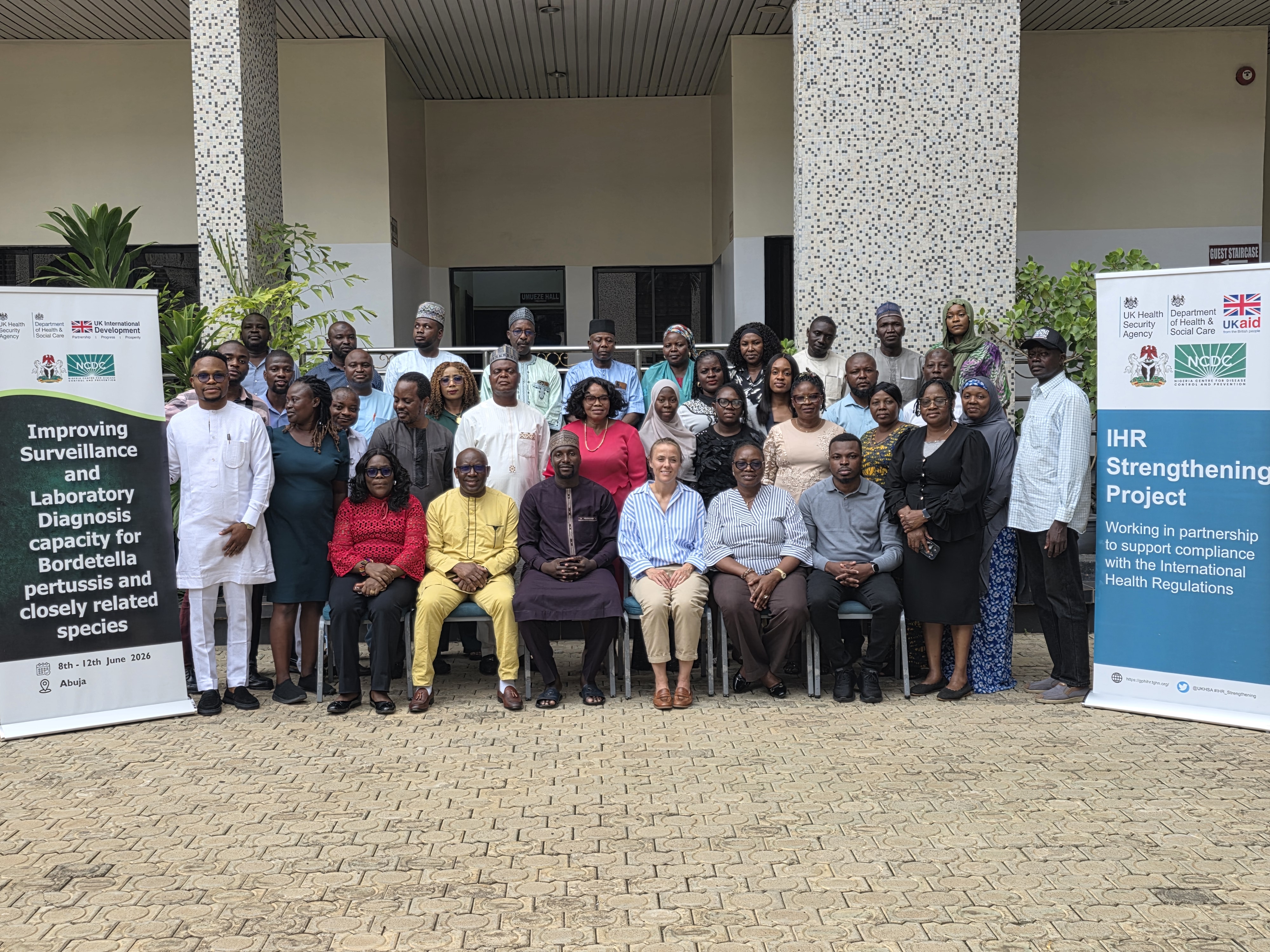
In June 2026, NCDC brought together 36 epidemiologists, disease surveillance officers, and laboratory scientists from across the country for a hands-on workshop in Abuja to improve capacity for surveillance and laboratory diagnosis of whooping cough. It was also an opportunity to facilitate interaction between surveillance and laboratory teams to ensure timely information sharing, improve data quality, and support rapid detection and response.
For the first time, the training reached beyond Nigeria’s national reference laboratories to include facilities in outbreak-prone states, bringing diagnostic expertise closer to the communities who need it most. This supports faster case confirmation, earlier outbreak detection and more effective public health responses, contributing directly to higher JEE performance across National Laboratory Systems, Disease Surveillance, Vaccine Preventable Disease Immunization, Human Resources, and Emergency Preparedness Resilience and Response.
The workshop focused on a practical challenge: pertussis is challenging to diagnose. The bacteria that cause it are difficult to grow in a lab, and diagnosis depends on getting samples collected and transported under the right conditions. These challenges can limit reliable diagnosis of whooping cough, especially in resource-constrained settings.
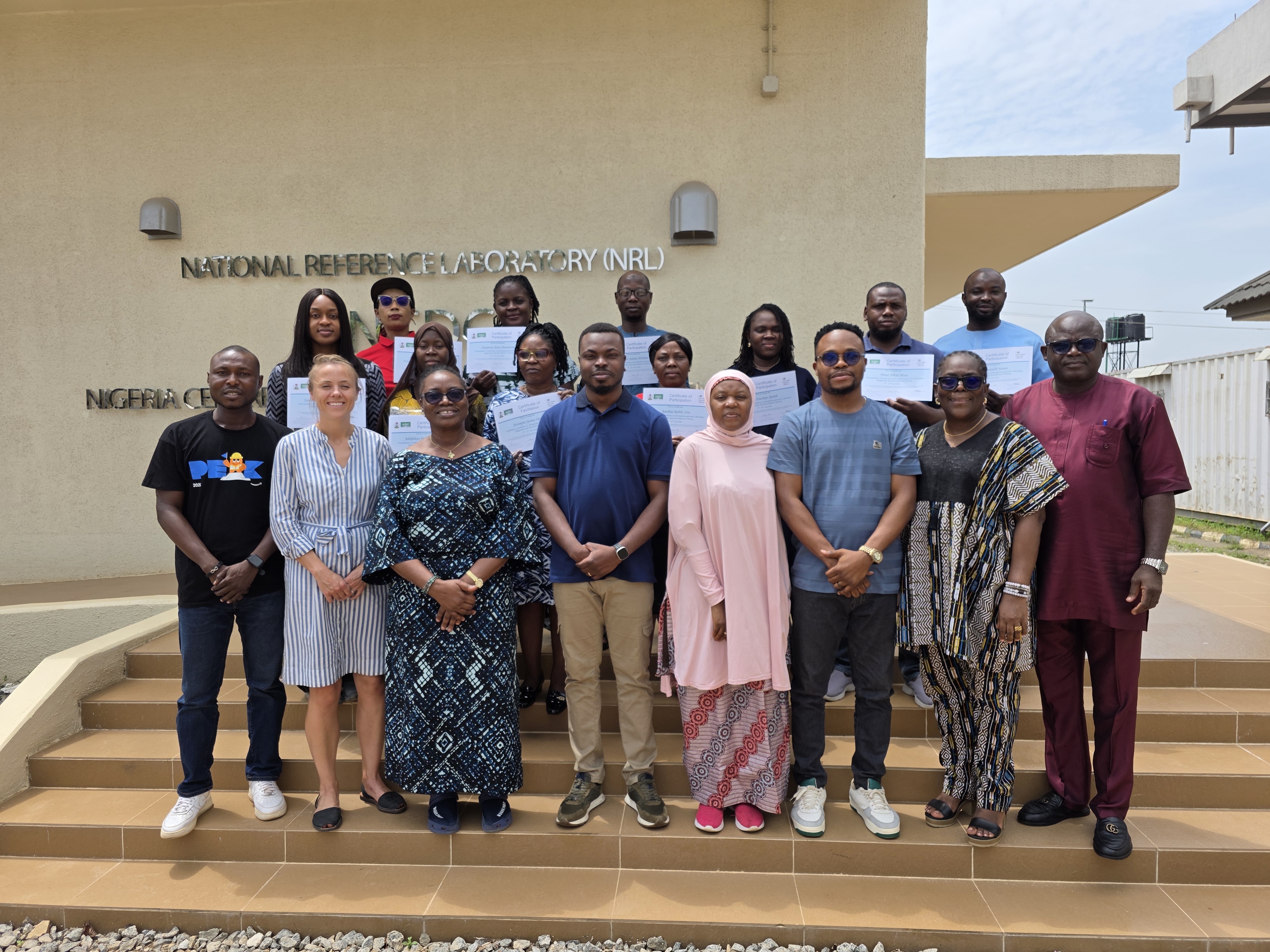
To help address this, laboratory technical experts from UKHSA’s IHR Strengthening Project and Respiratory and vaccine preventable bacteria reference unit (RVPBRU) supported NCDC in delivering training in a molecular testing method called qPCR, which offers a faster, more reliable way to confirm cases. Sessions covered the full testing process, from sample preparation through to interpreting results, alongside process standardisation, quality assurance and safe laboratory practices. This has equipped laboratory staff in outbreak-affected states with the necessary skills to detect, confirm and accurately report pertussis cases using PCR, strengthening state and regional capacity for rapid outbreak detection and response. These labs are now capable of activities such as routine testing, cascading training through peer-peer mentorship and quality assurance which will help to maintain resilience and preparedness for future outbreaks.
Looking ahead, NCDC and UKHSA plan to build on this progress with further training on detecting antimicrobial resistance in pertussis. The aim is to help Nigeria develop sustainable, in-country capability that does not rely on external support.
This latest workshop is part of a longer-term partnership between NCDC and UKHSA to strengthen Nigeria's laboratory network and surveillance systems, helping the country detect and respond to disease threats earlier, both now and in the future.
Useful Resources
Related Articles
-
From vision to action: Sindh’s IDSR Lab Network Review marks key progress in Pakistan’s IDSR journey
BY Dr Muhammad Sartaj -
Gilgit-Baltistan launches new laboratory network in efforts to strengthen Integrated Disease Surveillance and Response across Pakistan
BY Dr Muhammad Sartaj, Sumera Abid -
Nigeria’s National Reference Laboratory achieves international accreditation
BY Olubunmi Negedu-Momoh -
Proactive preparedness: Ethiopia establishes VHF detection capacity ahead of regional need
BY Leanne Devine, hiwothailu -
From Nigeria to The Gambia: IHR-SP advances cross-sectoral leadership in public health
BY Paul Irabor
Please Sign in (or Register) to view further.