Key achievementsSince 2023, UKHSA’s IHR Strengthening Project has collaborated with Nigeria CDC (NCDC) and partners - WHO, Ehealth Africa, and JhPIEGO – to strengthen Nigeria’s disease surveillance system. By building the leadership and data analysis capacity of 37 State Epidemiologists, the project enabled 15 states to publish regular disease surveillance bulletins for the first time, using a standardised national template that has established routine information sharing where none previously existed. Nigeria CDC Field Epidemiologists now hold core skills in QGIS and applied data analysis, reducing reliance on external technical assistance. Crucially, Nigeria CDC can now train its own surveillance workforce - creating a sustainable, nationally-owned pathway to improved disease detection, analysis, and response. The State Epidemiologists Network has embedded this sustainability further, providing a platform for peer learning, shared problem-solving and standardising outputs with open tracking of bulletin production. This has motivated additional states to participate and continuously raise standards. A post training evaluation at four months showed that 94% of State Epidemiologists could independently analyse epidemiological data and incorporate spatial visualisation into their outputs. These capabilities have strengthened data driven decision making at state level, improved key stakeholder engagement, and enabled stronger evidence based advocacy for resources during outbreaks. In Zamfara State, this directly contributed to the Emergency Operations Centre securing N75million Naira approval, and the introduction of monthly environmental sanitation days in all local government areas during a cholera outbreak - a concrete example of surveillance intelligence driving real public health action. |
Overview
In Nigeria, each of the 36 States and the Federal Capital Territory designates a State Epidemiologist to coordinate disease surveillance and response activities. Their role is to continuously gather, analyse and interpret epidemiological data, and share practical, actionable information to guide timely public health interventions1.
However, appointments to these strategic roles are often made without a standardised or competitive selection process to ensure that individuals with the most relevant competencies and experience are chosen. As a result, the capacity and expertise of State Epidemiologists varies significantly across the country, particularly in their formal training in field and applied epidemiology2.
In 2020, the UK Health Security Agency (UKHSA), then operating as Public Health England (PHE), produced a paper titled “Briefing Paper for NCDC Leadership: Supporting the State Epidemiologist Function and Network” in response to questions from the Director General of the Nigeria Centre for Disease Control (NCDC) regarding the role of State Epidemiologists and the establishment of a national network. The document outlined the essential competencies and minimum entry requirements for State Epidemiologists, approaches to identifying and addressing their training needs, strategies to strengthen peer-to-peer support within the network, and guidance on defining research priorities and fostering research activities3.
The 2023 Joint External Evaluation (JEE) highlighted persistent gaps in Nigeria’s field epidemiology workforce, including inconsistent technical capacity, weak coordination mechanisms between states and limited competency for data-driven decision-making4.
In response to a formal request from NCDC, UKHSA's IHR Strengthening Project (IHR-SP) revived the Network of State Epidemiologists in 2022 by helping develop clear terms of reference and providing ongoing support. The network clarified roles, enabled peers to learn from each other, and introduced targeted training to close identified gaps, strengthening surveillance capacity, particularly around data analysis and uses.
Methodology
A multi-step evidence-based approach was used to strengthen subnational surveillance capacity, aligned with International Health Regulations (2005) core capacities and recommendations from the 2023 JEE.
1. Understanding the Learning Needs
A comprehensive learning needs assessment (LNA) was conducted in 2024 among the 37 state epidemiologists in Nigeria to identify priority technical and leadership capacity gaps. The assessment focused on the following competency domains:
- Data Analytics and Assessment
- Public Health Sciences,
- Communication
- Community Partnership
- Management and Finance
- Leadership and System Thinking
- Policy Development and Programme Planning
Findings from the assessment revealed that while most State Epidemiologists were familiar with surveillance processes, their ability to lead, interpret data, and translate evidence into action was significantly limited. A third of the participants had only basic or no proficiency in Leadership and Systems Thinking. The gaps were even more pronounced in Data Analytics and Assessment, where over 70% fell below proficiency. Policy Development and Programme Planning showed the weakest scores, indicating difficulty converting epidemiological findings into operational or strategic public health decisions.
These gaps demonstrated that the challenge was not merely about collecting data, but about using it to drive timely, evidence-based responses. These findings shaped the subsequent leadership training design, ensuring it would address not just technical gaps but the leadership and decision-making skills needed to act on surveillance data effectively.
2. Training Development and Delivery
Following the learning needs assessment, the findings were presented at the Annual Disease Surveillance Review Meeting, attended by NCDC leadership, State Epidemiologists, and State Disease Surveillance and Notification Officers, and development partners. The assessment resonated strongly - NCDC and the State Epidemiologists Network formally requested that UKHSA lead the development of targeted training to close the identified gaps, reflecting shared ownership of the problem from the outset.
Training content was developed collaboratively with technical experts in epidemiology, data management, and leadership from UKHSA, WHO, Ehealth Africa, JHPIEGO, and NCDC. Directly responding to the assessment findings, the curriculum focused on three critical areas: using Excel for data analysis, applying geospatial software to map epidemiological data, and strengthening leadership capacity.
The training had two components delivered between November 2023 and July 2025.
|
Component one: Data Analysis The first component introduced State Epidemiologists to Microsoft Excel for epidemiological analysis and QGIS software for spatial mapping of epidemiological data. The aim was to improve participants’ ability to process, analyse, and present surveillance data in clear, visual formats, including spatial representations to improve outbreak detection and response planning. After the training, NCDC committed to developing and distributing a standardised epidemiological bulletin template for use across all states, ensuring consistency in how surveillance information is presented to stakeholders nationwide. Component Two: Leadership The second component addressed a gap that technical training alone could not close. State Epidemiologists needed not just stronger analytical skills, but the confidence and authority to act on their findings. The leadership training was designed to shift State Epidemiologists from passive data managers to active decision-support leaders – capable of guiding outbreak response, shaping policy and coordinating multisectoral action. It focused on balancing managerial and leadership responsibilities, manage dynamic teams, working collaboratively with stakeholders, and navigating institutional dynamics to achieve lasting system change. |
Sustainability and South-South collaboration
Consistent with the UK’s commitment to the Paris Agreement, the initiative was designed to minimise its environmental footprint. The data analysis training delivery was merged with the Annual Disease Surveillance Review Meeting to reduce the frequency of travel, virtual platforms were used for planning meetings and follow-up and training materials provided digitally.
Furthermore, national expertise was used to eliminate emissions associated with long international travels. Importantly, the initiative fostered south–south collaboration by fostering knowledge exchange and technical support between Nigeria, Zambia, and Ethiopia. Drawing on expertise from across this network ensured that training content was contextually grounded and adaptable - reflecting the principle that sustainable health system strengthening is built on shared regional knowledge, not solely on external technical assistance.
Measuring impact
To evaluate the effectiveness of the data analysis training, an immediate post-training evaluation was followed by a four-month follow-up survey.
For the leadership workshop, evaluations were conducted immediately before and after the workshop to assess improvement in four areas: Becoming a Leader, Leading an Organisation, Motivating a Team, and Navigating Politics and System Change.
94% of the state epidemiologists who participated in the follow-up evaluation reported they could now independently analyse epidemiological data and include spatial visualisation in their outputs. Three months after the training, 15 states were producing and sharing monthly epidemiological bulletins for the first time, demonstrating both the adoption of the agreed template and sustainable regular information sharing.
|
"I was able to develop epidmiology bulletins for the state. Which happened to be the first of its kind." - Osun State Epidemiologist |
"I have used the knowledge to present my reports on outbreak investigations and weekly situation update reports for my state." - Ekiti State Epidemiologist |
|
"I am currently planning for an annual State Surveillance Review Meeting in Zamfara state, using the QGIS knolwedge to develop QGIS maps and epidemiological bulletin for all the reported priority diseases 2023 in Zamfara state." - Zamfara State Epidemiologist |
"I stepped down the QGIS and data analysis training to surveillance officers in the state. My team has produced monthly epidemiological bulletins regularlay and this has resulted in a budget line in the Ministry of Health's budget for surveillance activities." - Plateau State Epidemiologist |
The leadership training showed marked improvements. Before the training, the proportion of participants reporting gaps in expected leadership competencies ranged from 30% to 51% depending on the competency area. After the training, self-reported gaps dropped below 8% across all assessed areas (Figure 1).
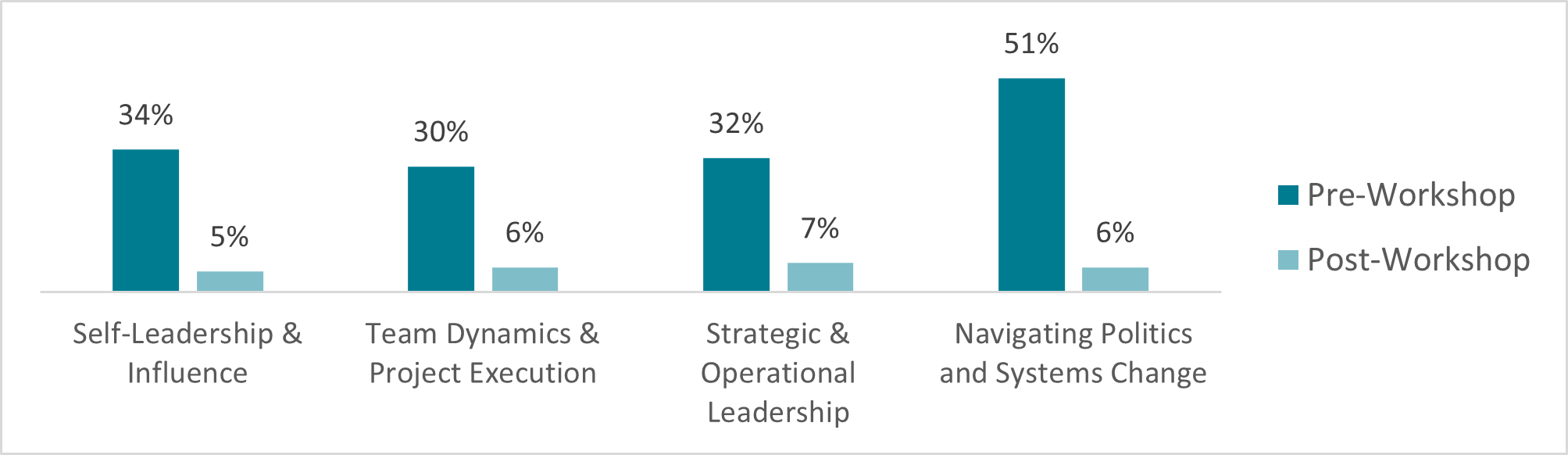
Figure 1: Self-reported leadership and competency gaps before and after training
These improved skills have translated into improved use of data for decision-making at state-level, more effective engagement with stakeholders, and stronger evidence-based advocacy for resources to support outbreak response.
|
"The data analysis, QGIS/mapping, and leadership trainings have strengthened evidence-based decision-making, visualisation and targeting of hotspots, logistical planning, coordination, and advocacy. These improvements helped secure WHO funding for the Surveillance Improvement Plan which supports active case searches, clinician sensitisation on prioritiy diseases, and training of community informants for case identification and notification. As a result, case detection and reporting capacity, stakeholder buy-in, and credibility with the State and partners have all increased." - Kwara State Epidemiologist |
Additionally, three state epidemiologists secured scholarships for conference attendance and advanced data analysis training by demonstrating their enhanced capabilities and suitability for such opportunities.
Learnings
The training and establishment of the State Epidemiologists Network delivered meaningful, measurable change. Participants developed stronger capacity to analyse surveillance data, apply geospatial tools, and establish routine reporting on priority diseases – with at least 15 states now producing and sharing routine monthly epidemiological bulletins for the first time. This represents notable progress towards evidence-based surveillance and response, and consistent stakeholder engagement across Nigeria.
The Network has proven to be more than an administrative structure. By providing a platform for peer learning, standardisation and openly tracking bulletin production across states has created accountability, motivating states that had not yet participated to begin contributing and raising the overall standard of outputs.
However, the initiative also surfaced systemic challenges that technical training alone cannot resolve. Frequent reassignment of State Epidemiologists disrupts continuity and dilutes the long-term return on training investment. Competing technical and administrative demands can limit their capacity to produce timely monthly bulletins, and to pass knowledge and skills on to the next generation of workforce - both of which are essential to long-term sustainability.
On delivery, while virtual methods proved effective for planning and some training components, participants consistently reported a preference for in-person sessions, citing better engagement and fewer distractions. This is a practical consideration for the design of future training.
Looking ahead, peer-to-peer learning has been identified as the next critical intervention - providing on-the-job support to states that are not yet producing or sharing bulletins, and helping those already doing so to improve quality. This approach builds on what the initiative has already demonstrated: that sustained progress is most likely when ownership sits within the system itself.
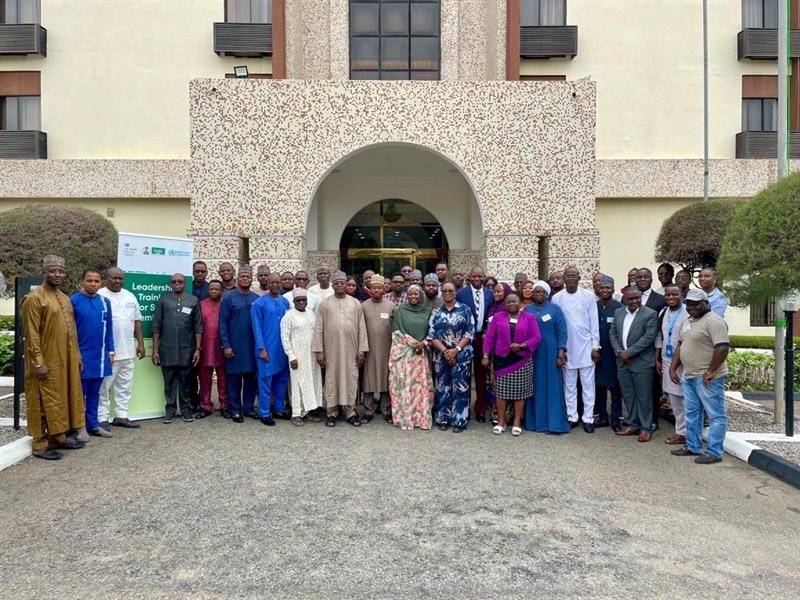
Image: participants of the State Epidemiologists' leadership training workshop
References
-
Federal Ministry of Health, Nigeria Centre for Disease Control. National Technical Guidelines for Integrated Disease Surveillance and Response. 3rd ed. Abuja (Nigeria): Federal Ministry of Health – Nigeria Centre for Disease Control; 2019.
-
Nigeria Centre for Disease Control. Building sub-national health security: Establishing coalition of state epidemiologists in Nigeria. Abuja (Nigeria): Nigeria Centre for Disease Control; 2019.
-
Elton J, Oyebani O, Logan S, Inamdar L, Aruna O. Briefing paper for NCDC leadership: Supporting the state epidemiologist function and network. Abuja (Nigeria): Nigeria Centre for Disease Control; 2020.
-
World Health Organization. Joint external evaluation of the International Health Regulations (2005) core capacities of Nigeria: Mission report, 14–18 August 2023. Geneva: World Health Organization; 2023.