16 Jun 2025
Twelve members of Nigeria's Rapid Response Team (RRT) are now equipped to deliver specialist chemical incident training across the country, following an intensive train-the-trainer programme developed in partnership between the UK Health Security Agency (UKHSA) and the Nigeria Centre for Disease Control (NCDC).
Nigerian RRT members can now cascade specialist knowledge to colleagues in states and regions across the country – reaching a wider range of stakeholders quickly, at lower cost with limited reliance on international partners. The approach also ensures training can be adapted to local contexts and delivered sustainably over time, marking a step towards Nigeria’s self-sufficiency in public health emergency preparedness for chemical events.
Responding to a gap in chemical response capacity
A number of chemical incidents, such as the unknown illness in Sokoto and Zamfara states later attributed to suspected exposure to heavy metals, have highlighted gaps in Nigeria’s existing emergency chemical response capacity. The Director General of NCDC requested that NCDC and the Rapid Response Team (RRT) receive specialist response training for chemical events.
In response, the UKHSA International Health Regulations Strengthening Project (IHR-SP) developed and delivered specialist training to 32 participants in September 2023 to equip RRT professionals with the knowledge, skills and field experience required to respond effectively to chemical incidents. A refresher session on key areas was also delivered to 38 participants in June 2024. These training sessions equipped Nigeria’s RRT to deliver prompt public health interventions during chemical events.
However, the initial cohorts were just the starting point. Nigeria needed more RRT professionals across all regions with chemicals knowledge and specialist skills. To build the number of trained chemical responders, a sustainable, efficient and resource-effective approach was required. The solution was to equip chemical RRT staff to deliver the training themselves.
Training of trainers approach
A training approach was developed by UKHSA, adapting materials designed by IHR-SP’s Emergency Preparedness, Response and Resilience (EPRR) technical advisers, used for similar trainings the facilitation of public health training skills in Ethiopia and South Africa. These are based on a simplified version of the UK Business and Technology Education Council (BTec) level 3 teaching and training qualification.
The core focus of the training is to provide participants with the knowledge, skills and experience to deliver targeted, accessible, interactive learning. It is intended to make participants question teaching and training approaches and to draw on each other’s expertise and experience as part of the course.
Training overview
Thirteen participants attended the workshop in Abuja between 9-13 June 2025. The workshop included teaching and training theory, how and when to use different teaching roles and techniques, how to prepare to teach, and the importance of assessment and evaluation. Participants then spent three days putting theory into practice, each presenting their own microteach sessions for peer evaluation and reflection.
The sessions deliberately modelled the interactive approach participant would go on to use. Sessions used group activity, structued discussion and digital tools such as Menti, while traditional lecturing was kept to a minimum.
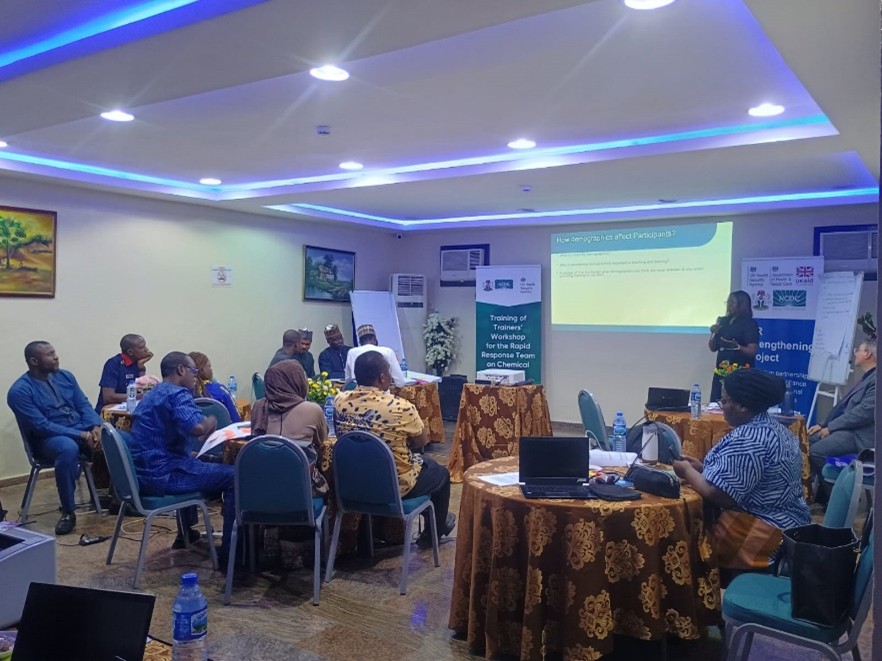
Image above: a trainee delivering a 'micro-teach' using the skills taught during the workshop
Participants received a package of resources to support their development including sample lesson planners, slide deck templates and a course manual hosted on a dedicated Padlet site. Throughout the programme, participants received ongoing assessment and evaluation through peer-to-peer feedback, a video recording of their sessions and formal written feedback.
Feedback on the training was very positive, with 100% of responders reporting that the course had:
- improved their confidence in delivering Rapid Response Team training
- equipped them with the necessary skills and knowledge to do so
- used materials and presentations that were useful and easy to understand.
Next steps
Nigeria now has the foundations to build its RRT chemical response capacity independently. The newly trained facilitators can deliver training at state level, multiplying the programme’s reach. UKHSA and NCDC are also developing quality assurance processes together to ensure consistent standards as training scales up and provide ongoing support.
This shift from receiving UKHSA training to leading national and regional rollout to NCDC and RRT members demonstrates that Nigeria is firmly on the path to building a self-sufficient chemical response capability.
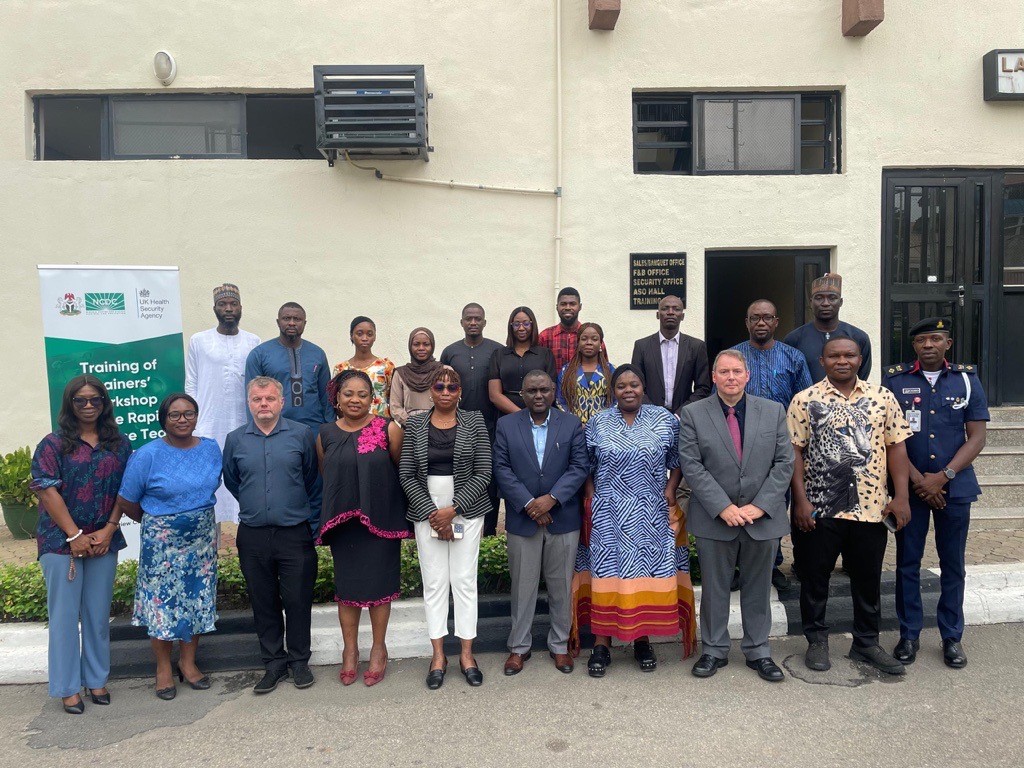
Image above: training facilitation skills workshop participants
Also By
Useful Resources
Related Articles
-
Enhancing technical capacity of public health workforce in environmental epidemiology across Southeast Asia
BY Inneke Suhanda -
Training of trainers - poisoning management in Ethiopia
BY IHR -
First-of-its-kind Community-Based Surveillance Training in Mardan to Boost Pakistan’s Disease Preparedness and response
BY najmajavedawan, Mirza Zeeshan Iqbal Baig, Nadia Nisar, Dr Muhammad Sartaj -
Cross-continental learning builds ASEAN’s Public Health Emerging Leaders
BY Paul Furtado, Dingase Faith Mvula, Inneke Suhanda -
IHR-SP supports the Senior Leadership Symposium of the Nigeria Centre for Disease Control and Prevention
BY IHR
Please Sign in (or Register) to view further.