28 Nov 2025
Public health professionals from across Southeast Asia have delivered their first independently-run simulation exercise training – marking a significant step towards self-sufficient regional response capabilities.
In November 2025, newly trained facilitators from Cambodia, Malaysia, the Philippines and Thailand led a week-long simulation exercise training course in Jakarta. The course, part of the UK Health Security Agency's (UKHSA) partnership with the Association of South East Asian Nations (ASEAN), represents a milestone in building sustainable, locally-owned capacity to respond to future health emergencies in the region.
Building on strong foundations
Since 2023, the IHR-SP Indo-Pacific and Emergency Preparedness, Resilience and Response (EPRR) teams have partnered with the ASEAN Emergency Operations Centre Network (AEOCN) to enhance the capability to design and deliver high-quality Public Health Emergency Management (PHEM) training across Member States. In parallel, the EPRR team has supported the development of the PHEM Emerging Leaders Programme (ELP) in partnership with US CDC, which has created a growing network of skilled public health professionals positioned to guide the next phase of regional capacity strengthening.
From learners to leaders
In June 2025, 25 ELP graduates participated in a new Capacity Development Module (CDM), designed to bridge technical knowledge with practical facilitation skills. The module comprised two key components: designing and delivering simulation exercises, and core facilitation techniques. Its purpose was clear - to build a sustainable group of ASEAN facilitators who could lead and expand PHEM training across the region.
Following the completion of the CDM, the ASEAN PHEOC Network wanted to put the new model into practice which provided an ideal opportunity for a dedicated simulation exercise course using the newly qualified graduates who would lead the delivery of the training. Seven participants from Cambodia, Malaysia, the Philippines and Thailand were selected to form the facilitation team for the simulation exercise training, which took place in Jakarta from 3 to 7 November 2025.
To help them prepare to deliver the training, the IHR-SP EPRR team led an 8-week coaching and mentoring programme. Facilitators participated in one-to-one coaching sessions, peer reviews and collaborative planning discussions. These practices were deliberately built to promote a supportive learning environment emphasising open, honest and developmental communication, and to strengthen their confidence in being facilitators.
The facilitators were provided with the essential content, but they had creative control over how they delivered the sessions and designed activities. Each day of the training, a different facilitator took the lead, guiding sessions and modelling the collaborative approach that ASEAN participants are encouraged to adopt in their own institutions.
Participant feedback gathered affirmed the successful delivery of the training, describing it as a “well organised training with clear materials, systematic structure and excellent facilitators”.
Vanessa Middlemiss, Strategic EPRR Lead for IHR-SP said, "The technical expertise and professionalism demonstrated by the newly trained ASEAN facilitators during the simulation exercise course shows the strength of regional capacity that already exists. They didn't just deliver training, they addressed questions and developed innovative solutions that reflect deep understanding of their region's needs. We’re proud to support this growing community of facilitators as they drive sustainable, locally-led emergency preparedness training across the Indo-Pacific region."
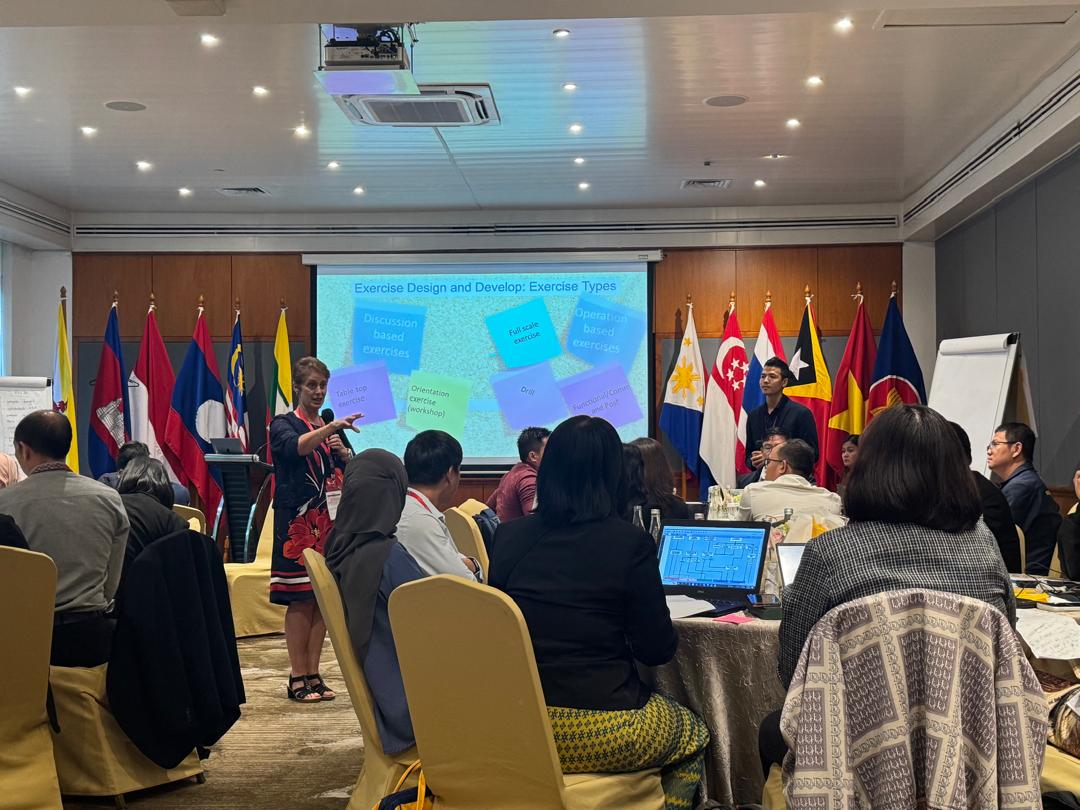
Image: Vanessa Middlemiss, Strategic EPRR Lead for IHR-SP leads a session during the simulation exercise training.
IHR-SP is continuing to support this emerging community of practice, reinforcing shared standards and embedding excellence in facilitation across the ASEAN region. With this foundation in place, the vision of a fully sustainable, ASEAN-led training ecosystem is within reach.
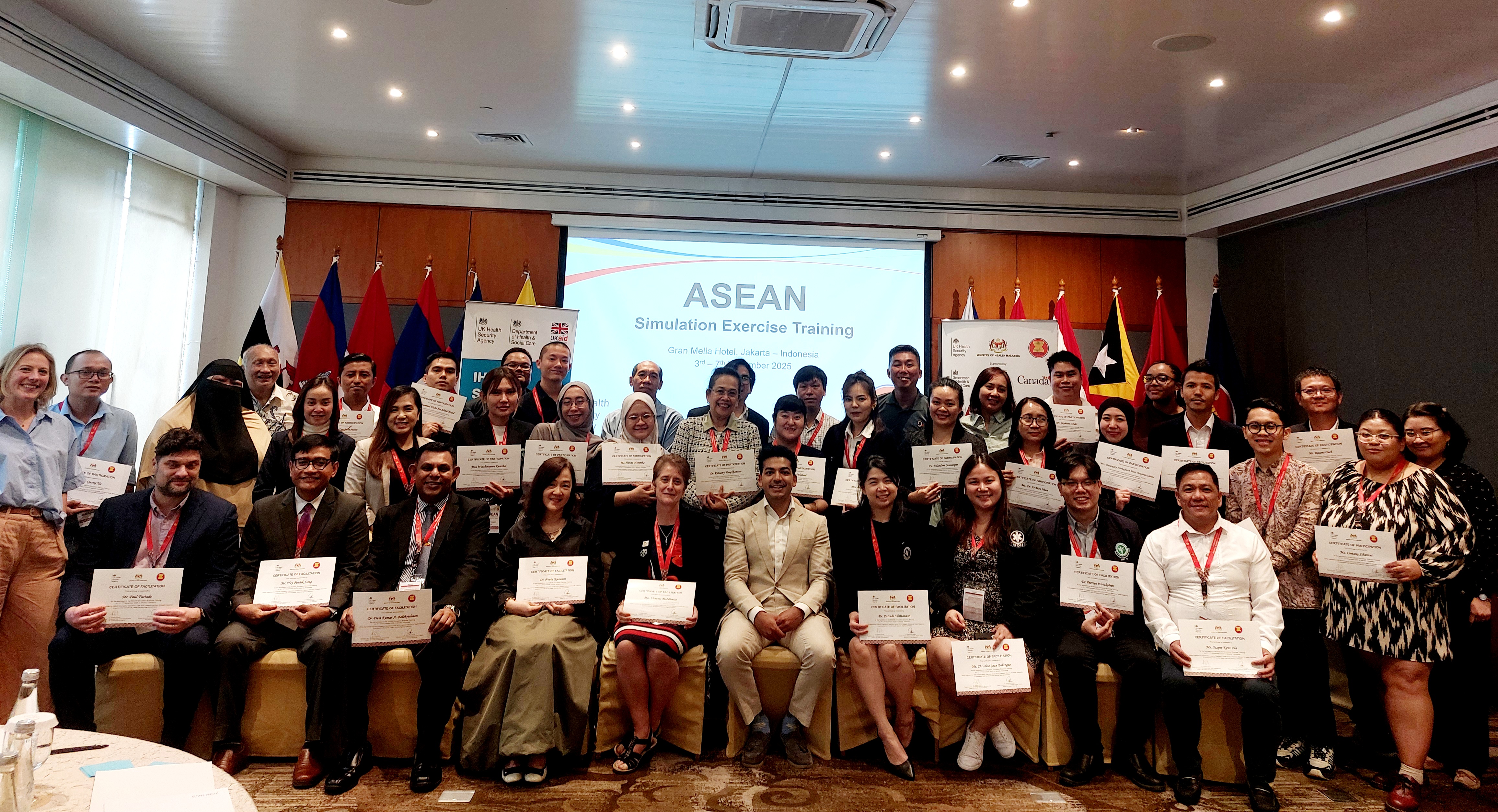
Image: attendees of the simulation exercise training
Useful Resources
Related Articles
-
Africa CDC PHEM Fellows receive first training on chemical, biological, radiological and nuclear hazards
BY Eyob Getachew Tensaw, Lydia Izon-Cooper, Addisalem G Taye -
UKHSA IHR-SP Partners with EPHI to Perform a Functional Exercise Named ‘‘Exercise ETH-Lahn’’
BY IHR -
Supporting Zambia to prepare and respond effectively to mpox
BY ihr -
Fourth Regional Training of Trainers on Public Health Emergency Operations Centres in Africa
BY IHR -
Strengthening Nigeria’s emergency response workforce through basic Public Health Emergency Management training
BY Lois Olajide
Please Sign in (or Register) to view further.