13 Oct 2025
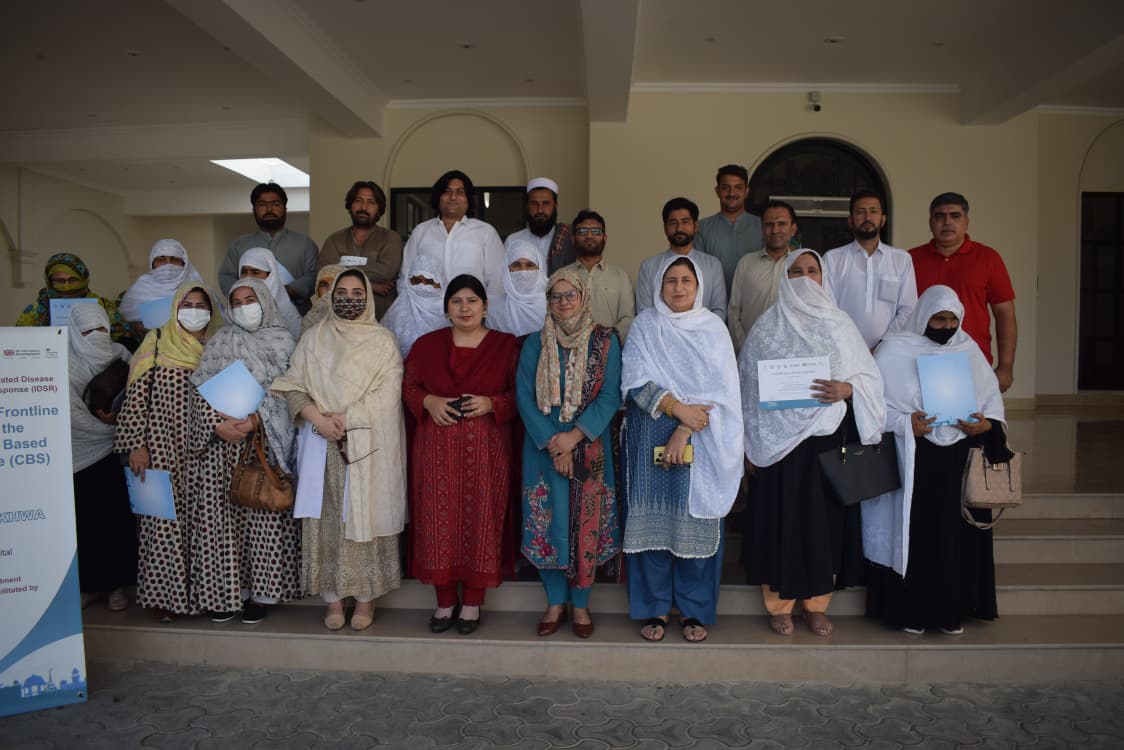
Communities in Pakistan are now better equipped to spot and stop disease outbreaks before they spread, following a first-of-its-kind practical training delivered to frontline health workers in Mardan district. Between 6-11 October 2025, 271 Lady Health Workers, supervisors, lab technicians and community volunteers completed cascade training in Community-Based Surveillance (CBS) across 20 Union Councils of Mardan district. The six-day programme equipped participants with the skills to detect unusual health patterns early and report them quickly through established channels.
This CBS pilot represents the first structured introduction of community-based surveillance within a government-led system in Pakistan. The training was delivered by the UK Health Security Agency’s (UKHSA) International Health Regulations Strengthening Project (IHR-SP), working in partnership with the National Institute of Health (NIH), the Khyber Pakhtunkhwa Health Department, and the Mardan District Health Office.
Why Community-based surveillance matters
The pilot emerged in direct response to clear gaps identified during recent outbreaks, where delayed detection and limited community-level reporting hindered timely action. Consultations with district health authorities reinforced the need for CBS, highlighting how engaging communities can capture early warning signals that facility-based systems often miss.
By recognising and reporting unusual health events quickly, communities become the first line of defence against outbreaks that could otherwise spread rapidly.
This initiative builds directly on the Training of Trainers (ToT) held in September 2025, where IHR-SP trained a group of ‘Master Trainers’, primarily district and provincial public health officers, equipping them with the skills and materials needed to cascade standardised surveillance and response training to frontline staff.
Training in Action
Participants learned how to use CBS reporting tools, apply case definitions, and follow data flow mechanisms for priority diseases. The training also included hands-on practice with DHIS2, the digital system used to collect and share health data in Pakistan.
Role-plays and group discussions helped translate theory into real-world outbreak scenarios, strengthening teamwork and communication between field workers and health facilities.
The sessions also highlighted the 7-1-7 approach critical for detecting a health event within seven days, reporting it within one day, and responding within seven days. This framework ensures that no time is lost when communities face potential outbreaks.
A Shared Commitment
In Pakistan, this work is part of a bigger picture. It strengthens the Integrated Disease Surveillance and Response (IDSR) system, which connects information from communities, health facilities and laboratories into one national framework. It also supports Pakistan’s commitments under the International Health Regulations (IHR 2005), which guide countries in preventing and responding to health threats that can cross borders.
Representatives from the Khyber Pakhtunkhwa Department of Health, the Mardan District Health Office, and UKHSA attended the opening session of the training, recognising the initiative’s role in generating timely, accurate and actionable health intelligence from the grassroots level.
Looking Ahead
The completion of these cascade trainings marks an important milestone, but ongoing support will be essential to maintain momentum. To keep CBS effective and scalable, sustained mentoring, regular data review meetings, and close coordination between district and provincial health authorities will be essential.
The IHR-SP team remains actively involved in this process by co-facilitating online review meetings, providing technical guidance to Master Trainers, and supporting district teams in interpreting and using CBS data for decision-making. Two online review meetings have already been held with Master Trainers, Lady Health Workers, and community volunteers to monitor progress, address challenges, and share practical solutions.
Moving forward, IHR-SP will continue to support routine mentoring, troubleshoot implementation gaps, and ensure that the capacity built through the ToT and cascade trainings is maintained and strengthened over time.
The bigger picture
Following evaluation of Mardan’s CBS pilot, the approach could be rolled out more widely across Pakistan, extending its impact beyond one district and strengthening disease preparedness nationwide. This innovative, first-of-its-kind effort under IHR-SP showcases how strengthening Pakistan's public health architecture through the IDSR framework can build a stronger shield against outbreaks for communities across the country.
Also By
Useful Resources
Related Articles
-
Enhancing technical capacity of public health workforce in environmental epidemiology across Southeast Asia
BY Inneke Suhanda -
Building a stronger health partnership with academic institutions for strengthening IHR in Pakistan: IDSR training for Master Trainers at The Institute of Public Health, Lahore
BY Dr Muhammad Sartaj -
IHR-SP supports the Senior Leadership Symposium of the Nigeria Centre for Disease Control and Prevention
BY IHR -
Cross-continental learning builds ASEAN’s Public Health Emerging Leaders
BY Paul Furtado, Dingase Faith Mvula, Inneke Suhanda -
From vision to action: Sindh’s IDSR Lab Network Review marks key progress in Pakistan’s IDSR journey
BY Dr Muhammad Sartaj
Please Sign in (or Register) to view further.